Search This Blog

Sunday, 31 July 2011

Schoolgirl finds an unusual fossil leaf


This fossil plant was found by Ruth Thornton, aged 11 who goes to Maldon Primary School in Essex. She found it among the rocks on the beach at Church Cliff, between Lyme Regis and Charmouth. Museum geologists identified the rock it is preserved in as having come from the Shales With Beef, and can also tell that it is from the birchi beds. The birchi beds are named for the ammonite they contain - Microderoceras birchi (see image below). The ammonites name comes from a contemporary and friend of Mary Anning called Colonel Birch.

This rock identification also fits with the layers in the cliff where the fossil was found.
Fossil wood is common at Lyme regis, but fossilised leaves and seeds are rare. All this plant material must have been washed from nearby land (along with the occasional insect or dinosaur!) and gives a clue about what life was like on land in the early Jurassic period 200 million years ago. The leaf does not appear to be exactly the same as others we are aware of that have been found in the rocks around Lyme Regis. This raises the possibility it could be a new species, but we need an expert opinion to be certain. It may be a new species for Lyme Regis even if it is not new to science. Another interesting idea that has been raised is that it looks similar to specimens found higher (younger) in the Jurassic. If it is the same it would not be a new species, but would extend the range of the existing species back into the early Jurassic. We will let you know when we find out more about this interesting specimen.

Sunday, 24 July 2011

Mary Anning's first Ichthyosaur comes home to Lyme Regis

"The most famous fossilist's most famous fossil!" That is how the specimen of Ichthyosaur "Temnodontosaurus platydon" (the cutting tooth lizard) that Joseph and Mary Anning found in the blue lias cliffs of Lyme Regis has been described. It is believed that Joseph found the skull and Mary (who was just 12 at the time of the discovery) went on to find the neck section a few months later. The Annings sold the ichthyosaur to Henry Host Henly, of Colway Manor in Lyme, for £23 and it was sent off to London never to return. Until this week!!

The specimen's current owners, The Natural History Museum, have agreed that it can return to Lyme for a short period and on Thursday 21st July two of their staff brought it down in the back of a van. The picture to the right shows the van parked outside Lyme Regis Museum in what was Cockmoil Square where the Annings had their home and workshop. Museum geologist, Paddy Howe is removing the top of the packing case to get a first view of the ichthyosaur in Lyme Regis. Dr Martin Munt from the Natural History Museum is looking on.

The plan was to take the specimen up the museum's spiral staircase for display in the Geology Gallery but it was far too long and heavy for that. So it was manoeuvred through the the door and into the ground floor gallery. At least this allowed the photograph to the left to be taken from the staircase.

Until now, Lyme Regis has had to make do with a model of the ichthyosaur (below) but for a short period of time, townspeople and visitors will be able to see it in the place where it was found. The model will replace it at the Natural History Museum.

The Ichthyosaur head will be at Lyme regis museum until at least the end of September and will be a star attraction of Mary Anning Day on the 24th September. Click here for information on this event.

Friday, 22 July 2011

Lyme's royal connection

The first recorded royal visitor to Lyme Regis was Edward I (1239 -1307), who came to the town in May 1297. England was at war with France, and three years earlier Edward had ordered the town to build a galley of 120 oars to help with the war effort. It had to be finished by the time of his visit... and it was, although it only had 54 oars!

It was Edward I who, in 1284, had granted Lyme its royal charter, allowing the town to add "Regis" to its name (Regis is Latin for "of the King"). The charter had its positive and negative points. On the one hand, it entitled the town to two members to parliament and a merchant's guild. On the other hand, the town had to pay taxes to the King and build him a warship when he ordered them to!

For more information on the history of Lyme Regis, see the museum website.

Saturday, 16 July 2011

Lerrets and lucky stones

The picture above shows one of the lucky stones hanging inside Gail McGarva's new lerret Littlesea. The boat has two of these stones, one from Lyme Regis and one from Portland, to unite both ends of the coast (the boat is a double-ender too!).

Small pebbles with naturally-occurring holes in them have always been used as lucky charms. In other parts of the country they are known as "hag-stones", although Gail doesn't use this term herself. Neither does retired fisherman Ken Gollop, who simply calls them "stones with holes in 'em"! Ken says that in the old days, these pebbles were very rare in Lyme Regis -- you'd have to walk a hundred yards along the beach, scouring it carefully, before you found one. Nowadays, with the import of shingle from the Isle of Wight, the stones are far more common.

Hag stones have many uses besides protecting boats. They are often tied above windows or doorways for protection. There are numerous hag-stones in the Museum of Witchcraft in Boscastle, including one that has been tied to a door-key to prevent it from being lost!

Thanks to Gail McGarva for the photograph and information, and to Ken Gollop for additional information.

Tuesday, 12 July 2011

Evolution of ichthyosaurs: a new study

The evolution of ichthyosaurs was hit hard by a mass extinction event 200 million years ago, according to a new study from the University of Bristol. Ichthyosaurs are iconic fossils, generally dolphin-shaped (image left, top), and feeding on a diet of fishes and marine molluscs including belemnites and ammonites (image left, bottom). Ichthyosaurs were first discovered 200 years ago by Mary Anning on the Jurassic coast of Dorset at Lyme Regis. Hundreds of specimens of these dolphin-shaped predators have since been found, and they were abundant and important predators in Jurassic seas. The new study shows, however, that Mary Anning's Jurassic ichthyosaurs were actually a much reduced remnant of the former glory of the group.

Click here to continue reading about the results of this new study from the Palaeobiology and Biodiversity Research Group of the Department of Earth Sciences at the University of Bristol.

For more information on ichthyosaurs and other fossils of Lyme Regis, see the Fossils and Rocks page of the Museum website.

Friday, 8 July 2011

J. M. W. Turner and Lyme Regis

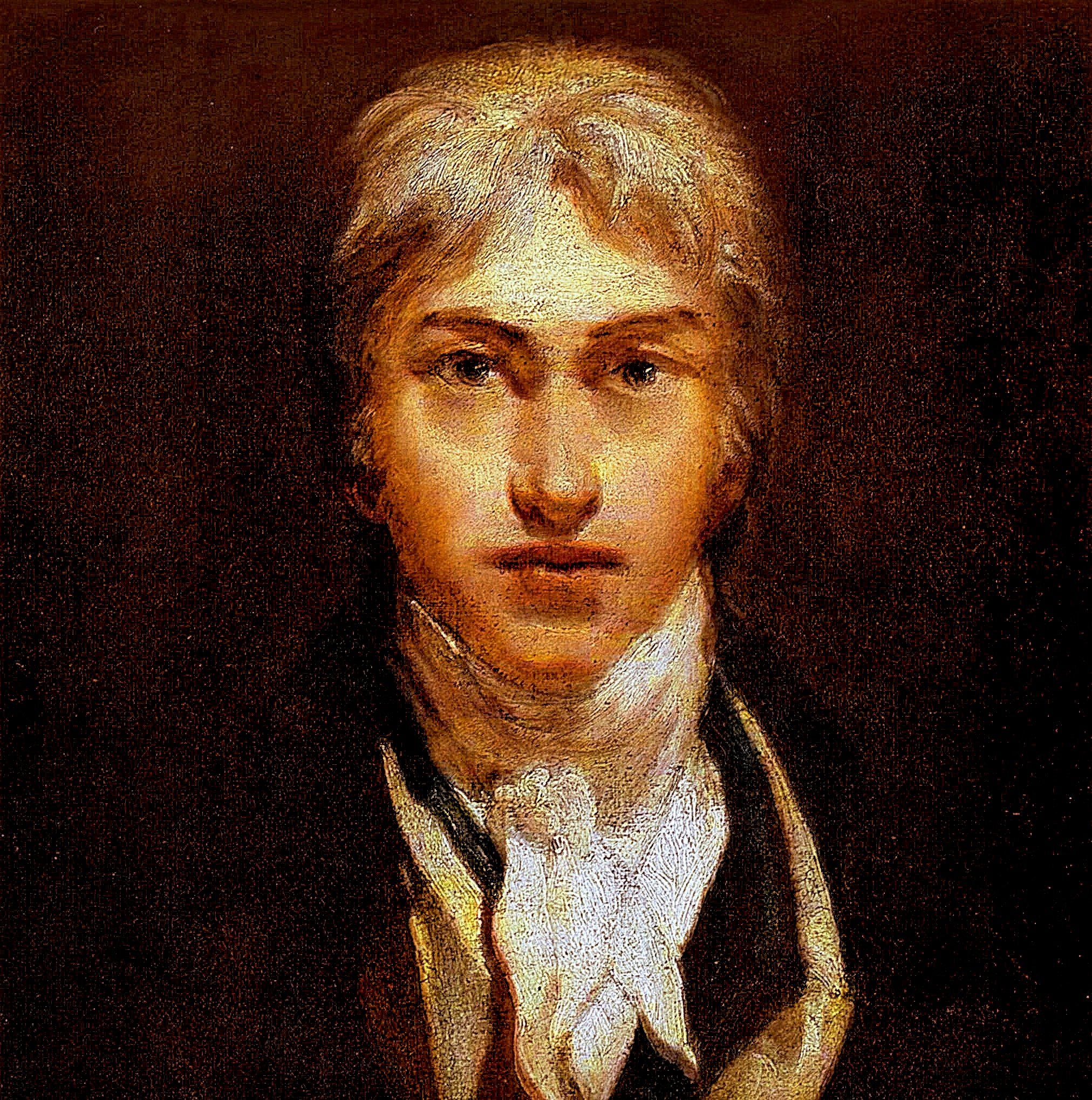
J. M. W. Turner (1775 - 1851) was a landscape painter whose name has become almost synonymous with adventurous British art -- the prestigious Turner Prize is named in his honour. Turner (whose self-portrait is shown on the right, courtesy of Wikimedia Commons) is especially remembered for his maritime scenes, ranging from dramatic naval battles to peaceful English seaside towns.

Turner produced watercolour paintings of Lyme Regis on at least two occasions:


There is also a small oil painting entitled "Shrimpers at Lyme Regis" on display in the drawing room of Nunnington Hall in North Yorkshire, which has recently been attributed to Turner.

For further information on Lyme's artistic heritage, see the Writers and Artists page of the Lyme Regis Museum website.

Monday, 4 July 2011

Curator’s Newsletter July 2011

From Mary Godwin, Director of Lyme Regis Museum:

We are a ‘Quality Business’!
In the last month we have been awarded ‘Jurassic Coast Quality Business’ status. This has involved us going on various courses and having a review of our operations and management. The lady who came out to review us arrived with the preconception that because we were a museum we weren’t really a business. She was quite surprised when I said that we were indeed very much a business; as an independent museum we rely largely on our own ability to generate income in order to survive and move forward – last year we generated 75% of our own income! By the time she left she was in no doubt that we were indeed very much a business! This award will get us valuable publicity on the Jurassic Coast website and demonstrates that we are a well-run organisation with a strong focus on customer service (as well as a great museum of course!!).

Resources for Schools
Our Learning and Outreach Officer Chris Andrew has been beavering away preparing a range of new school workshops. Information about all these is now on the museum website. There is also a new ‘discovery’ section with loads of useful info. and we are already getting noticeably more school visits. Chris is also working with Alison Bowskill from Woodroffe School on outreach visits to old people’s homes, which are proving very popular! Last week Chris worked with people from age 6 to 96 and most ages in between!

Museum Website Goes International!
Our website now has an instant translation facility! Go to the home page www.lymeregismuseum.co.uk and simply select your language from the drop down menu at top left! With increasing interest from overseas visitors, we hope this will encourage more visits in person as well as online. Thanks to Lorraine Chamen for finding out about the software and thanks to Keith Shaw for setting it up which involved quite a bit of work.

Tweeters - follow us on Twitter @LymeRegisMuseum

Saturday, 2 July 2011

Tolkien in Lyme Regis

J. R. R. Tolkien (1892 – 1973) spent most of his career as a Professor of English at Oxford University, but he is best remembered for The Hobbit (1937) and the three-volume Lord of the Rings (1954-5), which became the most popular fictional works of the twentieth century -- with combined sales of more than a quarter of a billion copies!

Tolkien (pictured left in 1911, courtesy of Wikimedia Commons) visited Lyme Regis regularly between 1905 and 1910 for summer holidays with his younger brother Hilary and their guardian Francis Morgan. They stayed at the Three Cups Hotel in Broad Street -- the same hotel patronized by fellow author G.K. Chesterton. Later on, Tolkien returned to the town with his wife and children on many occasions. It is believed that he absorbed the scenery and atmosphere of Lyme and its surroundings into several of his fictional scenes... just as Beatrix Potter had done when she visited the town!

To find out more about the many writers and artists associated with Lyme Regis, see the Writers and Artists page of the main website... or better still, visit the museum!

Monday, 27 June 2011

An earlier Dorset

The picture on the left, entitled Duria Antiquior or "an earlier Dorset", dates from 1830 and was one of the first attempts to depict Jurassic creatures such as ichthyosaurs and plesiosaurs as they were when they were alive, rather than as fossilized skeletal remains. The picture was drawn by Henry de la Beche (1796 - 1855) who, as well as being an amateur artist, was one of the leading geologists of the first half of the nineteenth century. He had lithographs made of Duria Antiquior, which were sold to raise money for Mary Anning and her family in Lyme Regis.

De la Beche spent much of his childhood travelling, but when he was sixteen his mother settled in Lyme Regis. He explored the geology of Lyme with Mary Anning, and wrote several articles on the area. In 1835 he founded the Geological Survey of Great Britain.

There are a number of exhibits in Lyme Regis Museum relating to Henry de la Beche, including the charming little drawing reproduced below, dated 23 March 1815 and entitled "French People at Lyme". The picture shows a group of visitors who would have come to Lyme by boat and landed at the Cobb.
Lyme Regis Museum is grateful to the Department of Geology at the National Museum of Wales for permission to use Duria Antiquior, and to the British Geological Survey for "French People at Lyme".

Friday, 24 June 2011

The History of Lyme Regis Museum

Lyme Regis Museum (seen above as it was circa 1980) has a fascinating history, which was described by its Director Mary Godwin in a talk at the Museum yesterday. The building itself dates from 1900-01, but for at least a hundred years prior to that the town boasted numerous private collections of fossils and curios, many of which were on public display. As early as 1811, on the very site of the Museum building, Mary Anning’s father had exhibited curios for sale, and his daughter later enlarged this collection into a spectacle of her finds which became famous, not only in Britain, but all across the continent, with visitors including crowned heads of Europe.

The majority of these early exhibits were commercially motivated, with the objects on display being offered for sale. However, in 1859, a collection went on show that was not for sale, but purely for the edification of the public. Consisting of fossils and other geological material, and including a 30ft ichthyosaurus, it was displayed at the Baths where it was open to the public daily by ticket. The same collection may also have been shown later at the Assembly Rooms.

In 1891, the then-mayor of Lyme, Thomas Philpot (a great nephew of the Philpot sisters who had been friends of Mary Anning) organized a temporary exhibition of local curios at the Guildhall, including pictures, engravings, coins and fossils. This exhibition was well received, and gave Philpot the idea of setting up a permanent museum. Although a museum was a must-have for all the great cities of the time, it was unheard of for a small town like Lyme... which only had a population of 2,000 when Philpot's museum was completed in 1901!

The architect selected by Thomas Philpot for the Museum was George Vialls, who had already designed a number of public buildings in Lyme. Philpot left it to Vialls to choose an appropriate style for the Museum. Vialls obviously had difficulty choosing, since the result was a bizarre mixture of Dutch renaissance, Jacobean and Art Nouveau!

Unfortunately, after its completion in 1901, the Museum stood empty for many years, due to a lack of public funding. For a few years during the First World War it served as a Red Cross depot, and was finally opened to the public as a museum in March 1921 -- thanks to the efforts of Dr Wyatt Wingrave, the museum’s first honorary curator. Wingrave virtually created the Museum single handed.

Sadly, this first incarnation of the Museum was short-lived. During the Second World War the building was converted into an ARP report post, with an air raid shelter in the cellar. After that, the building fell back into disuse until the 1960s, by which time its fabric was in a very poor state. Fortunately a group of people, led by the glass engraver Laurence Whistler, began to revive interest in the Museum. The picture on the left shows the state of the old East Wing in 1965; shortly after this it had to be demolished on safety grounds! Its utilitarian replacement was completed in 1969.

Between 1978 and 1988 the Museum's honorary curator was the novelist John Fowles, who transformed its fortunes by tapping into the massive growth of the tourism industry, as well as making best use of the energy and resources of local volunteers. Under Fowles's curatorship the displays and overall visitor experience were brought up to world-class standards -- but the building itself was still falling apart!

A massive renovation programme was begun in 1993, with the interior being completely stripped out and replaced. Soon after the work was completed in 1999, the Museum won the National Heritage NPI Museum of the Year award -- the predecessor of the prestigious Gulbenkian Prize!

To find out more about Lyme Regis Museum, visit the Museum website. If you're interested in attending one of the many excellent talks held at the Museum, see the Events page... or keep an eye on this blog!

Thursday, 23 June 2011

Disappearing Walks: the Mary Anning connection

The exhibition currently on display in the Rotunda at Lyme Regis Museum is Disappearing Walks by Annabel Ralphs. The exhibition's phenomenological approach to drawing and materials was inspired in part by a quote and illustration found in an exhibition celebrating Mary Anning in Oxford University Museum (including objects on loan from Lyme Regis Museum):

'Drawing with sepia from the ink sac of the contemporary cuttlefish, sepia officinalis, was already common in the eighteenth and nineteenth centuries, while the novelty of fossil sepia meant that it was particularly used in drawing fossils. In both cases the ink sacs were dried and ground to a fine powder before being mixed with water and shellac.'


The drawing above was made by Elizabeth Philpot, and shows one of the plesiosaurs discovered by Mary Anning. Her use of fossil sepia ink is recorded in a letter she wrote in 1833 (transcribed below), which includes some interesting details about Mary Anning.


Where Elizabeth Philpot used fossil sepia to draw fossils, Annabel Ralphs has used particular materials to trace the decaying wooden pilings surrounding West Bay:
  • Blue Lias, collected from Charmouth; the blue-grey colour is caused by its iron content.
  • Silver Point, suggested by drawing with a ring found on a cliff walk at Tyneham.
  • Oak Gall Ink which, similar to silver point, darkens over time through oxidization.

[Many thanks to Annabel for providing the text and pictures, and allowing us to use them.]

Sunday, 19 June 2011

This week's events at Lyme Regis Museum

TALKS

Thursday 23 June 2.30pm - HISTORY OF LYME REGIS MUSEUM: Curator Mary Godwin talks about the museum’s 1902 listed building, its architect and collections.

Saturday 25 June and Sunday 26 June 2.30pm - KNOW YOUR FOSSILS: A talk on how fossils lived, and how to find, identify and handle them, with museum expert Chris Andrew.

EXHIBITION

DISAPPEARING WALKS. Artist Annabel Ralphs records her interest in geology and tidal forces through drawings, photographs and other documents. This work has been inspired by many walks along the Dorset coast. In this Year of Maritime Lyme, the exhibition will be in the museum’s Rotunda Gallery until 30 June.

FOSSIL WALKS

Sorry, no fossil walks this week. The next one is on Thursday 30 June at 09:00.

OTHER WALKS

Monday 20 June 14:45 - Rockpooling
Tuesday 21 June 15:15 - Rockpooling
Saturday 25 June 15:00 - Mary Anning Walk

For full details of upcoming events, see What's On at the Museum.

Friday, 17 June 2011

PRESS RELEASE: Talks at the Museum

News Release 15 June 2011

The history of Lyme Regis Museum is the subject of curator Mary Godwin’s talk on Thursday (June 23) at 2.30pm. She will tell the story of the building, its architect and its collections. Former curator John Fowles, author of The French Lieutenant’s Woman, described the museum as representing Lyme’s soul – ‘both its past and living memory’. Twenty years on it is also a place of research, education, cultural events and entertainment.

Chris Andrew holds two of his ‘Know Your Fossils’ sessions this coming Saturday and Sunday (June 25/26) at 2.30pm. A professional fossil hunter, Chris will discuss how to find, identify and handle fossils, as well as how they lived, and how they have survived for 200 million years. View his recent finds and bring along your own discoveries for identification.
Lyme Regis Museum designed by George Vialls in 1902 (photograph Peter Wiles)
Mary Godwin, Curator of Lyme Regis Museum

Tuesday, 14 June 2011

Lyme Regis as Jane Austen saw it

As part of the Museum's Maritime Walks Week, Fred Humphrey took a small group of visitors and locals on a fascinating 90-minute tour of "Lyme Regis as Jane Austen saw it". As shown on the left, Fred appeared in the guise of Admiral Croft from Persuasion -- the novel by "Miss Austen" (as he insisted on calling her) that is partly set in Lyme. The tour started at the town's old harbour, called the Cobb, which is where Fred is standing in the photograph... in front of some precipitous steps known as "Granny's Teeth".

The Cobb would have been a centre of activity in Jane Austen's time, when Lyme was a flourishing port as well as a leisure resort. It was the latter role that brought the Austen family to Lyme, of course, since holidays by the seaside were the fashionable thing at the time -- boosted by one Dr Russell who had claimed, in the mid-eighteenth century, that sea bathing was the healthiest pursuit imaginable. Nevertheless, Jane was interested in the maritime side of things as well, and may even have been a closet "ship-spotter"... apparently she rebuked an acquaintance for not knowing the difference between a sloop and a frigate!

The Cobb features in one of the most memorable scenes in Persuasion, when Louisa Musgrove knocks herself out jumping down some steps. The novel is sufficiently precise that we can be reasonably sure just which steps these were -- not the precarious Granny's Teeth pictured above, but another set of steps a bit further along (pictured right -- with a member of the tour group descending rather more cautiously than Louisa Musgrove did!)

From the Cobb, the tour proceeded along Marine Parade (known as "The Walk" in Jane Austen's day) to the main part of town, with Fred pointing out the relatively small number of features which still remain from the early nineteenth century. The beach was there in those days, of course, but instead of lying on it wearing sun block and very little else, female visitors would have been completely hidden from view within contraptions known as "bathing machines"!

At the end of Marine Parade, where it intersects with Broad Street and Bridge Street, is the site of the most imposing building of Jane Austen's Lyme -- the Assembly Rooms. Sadly, the building was demolished in 1924, and the site is now a small car park. However, Fred assured us that in its time it would have rivalled the Assembly Rooms in Bath (presumably in terms of grandeur rather than size, since there's only a limited amount of space!).

It's well-recorded that Jane Austen visited the Assembly Rooms on several occasions while she was in Lyme. What is less well recorded is exactly where she stayed in the town -- probably in several different lodging houses. A short way up Broad Street there is a rather seedy looking building bearing a blue plaque (pictured below) with the inscription "Pyne House: This is the most likely lodging of Jane Austen, whose visits to Lyme in 1803 and 1804 gave birth to her novel 'Persuasion'."
For more information on Jane Austen's connections with Lyme Regis, see the Jane Austen page of the main Museum website. If you're interested in going on one of the many excellent guided walks organized by the Museum, visit the Events page... or keep an eye on this blog!

Monday, 13 June 2011

A Lucky Slip of the Geologist's Hammer

At the end of the Museum's fossil walk on 21st May 2011, Museum Geologist, Paddy Howe split a rock for Vincent Wong, a visitor from Hong Kong. This exposed a small example of the most common ammonite found in Lyme Regis, Promicroceras, of which most specimens are 1.5-2cm across and a crushed specimen of a larger ammonite called Asteroceras.
As he was leaving Lyme early next morning, Mr Wong went to the workshop after the walk to have his ammonite cleaned. For a small ammonite close to the surface of the rock this normally takes just a few minutes. The fossil was cleaned, but the rock needed to be made smaller due to weight restrictions on the filght home. Paddy split the rock but it broke in a different way to that expected and revealed a second larger Asteroceras ammonite in the middle of the rock!
This took about an hour to clean, but the result was well worth the effort and Mr Wong was very happy with his find.

To see Mr Wong and his find together with other finds on our Fossil Walks click here.

Sunday, 12 June 2011

This week's events at Lyme Regis Museum

MARITIME WALKS WEEK

See the town’s history and landscape on these guided walks with a maritime theme. Walks meet in appropriate starting places as listed and take about 1½ hours unless otherwise stated.

Monday 13 June 2.30pm at Lifeboat Station - LYME REGIS AS JANE AUSTEN SAW IT. A walk around Lyme Regis in the time of Jane Austen, with Fred Humphrey in the guise of Admiral Croft.

Wednesday 15 June 7.00pm at Lifeboat Station - FISHERMEN, FOSSILS AND THE FRENCH LIEUTENANT’S WOMAN. Walk with local boatman Ken Gollop to tour the Cobb – Lyme’s historic port and scene of its maritime industries, smuggling and pleasure boats.

Thursday 16 June 11.00am at Boat Building Academy - BOATS AND THEIR STORIES. Visit the boats of Lyme at the Boat Building Academy, the gig shed and the harbour with boatbuilder Gail McGarva.

Friday 17 June 10.00am at the Museum - LYME’S ERODING COAST. See the erosion of the coast and the coastal engineering schemes around Lyme with Richard Edmonds, Earth Science Manager of the Jurassic Coast. This walk takes about 3 hours.

Saturday 18 June 2.30pm at the Museum - MARY ANNING’S TOWN. A walk with Daphne Baker through the Lyme that Mary Anning would have known.

Sunday 19 June 2.30pm at Lifeboat Station - THE OLD CEMENT WORKS. A walk to the site of one of Lyme’s early industries and the remains of Monmouth Beach tramway, with Richard Bull. Some rough beach walking.

EXHIBITION

DISAPPEARING WALKS. Artist Annabel Ralphs records her interest in geology and tidal forces through drawings, photographs and other documents. This work has been inspired by many walks along the Dorset coast. In this Year of Maritime Lyme and to complement the Maritime Walks Week, this exhibition is in the museum’s Rotunda Gallery until 30 June.

For full details of upcoming events, see What's On at the Museum.

Thursday, 9 June 2011

PRESS RELEASE: Exhibition opening

News release 9 June 2011

Artist Annabel Ralphs at the opening of her exhibition Disappearing Walks at Lyme Regis Museum on Wednesday (June 8). The exhibition highlights her fascination with the geological and tidal erosion of the Devon and Dorset coast through drawings, photographs and documents – one of which takes the unusual form a concertina-fold book designed to be handled. The exhibition runs until June 30.

Wednesday, 8 June 2011

PRESS RELEASE: Boatbuilding Fun Day

News Release 7 June 2011

Successful sailors: Children and parents became boatbuilders for the day at Lyme Regis Museum, creating these model boats from driftwood. The family fun day on Wednesday 1 June, co-ordinated by local artist and art teacher Alison Bowskill, attracted 135 children accompanied by 218 adults.

Curator’s Newsletter June 2011

From Mary Godwin, Curator of Lyme Regis Museum:

Water Way to Have a Good Time!
May has flown by in a flurry of activity, mostly involving boats and maritime history! One of the highlights was the launch of the lerret off the very steep shingle bank at Cobb Gate on the stormy morning of 22nd May. It was an exciting and rather scary moment but, having been designed for such launchings, she went into the water like a duckling! I was rather concerned as I had encouraged Roger Goulding, regional committee member of the Heritage Lottery Fund (who have funded our lerret project) to get into the boat to be rowed across to the Cobb. Despite being much more smartly dressed than the rest of us, Roger very nobly rose to the challenge and as seawater started to gently seep into the boat half way across, simply lifted his feet up to keep dry!
 More Maritime Lyme events are coming up. On 8th June from 6pm is the preview of our new Rotunda exhibition ‘Disappearing Walks’ by Annabel Ralphs, to which everyone is welcome. From 13th-19th June we have Maritime Walks Week. A great programme of varied walks is on offer, with excellent guides including Gail McGarva and Richard Edmonds. See the museum’s printed programme or the website for full details – not to be missed! And if you haven’t purchased one already, don’t forget to buy your copy of Ebb & Flow – The Story of Maritime Lyme, written by Peter Lacey. The museum shop has copies signed by the author.

Representing the Museum
I’m looking for people who might be prepared to be the museum’s representative on a variety of groups including the Dorset Museums Association, Dorset Archaeological Committee, Dorset History Forum and even Devon Museums Group in which we are included due to our ‘virtually in Devon’ status! Meetings of these groups are infrequent and travel expenses will be paid. All I ask is for a brief update on anything of importance/relevance to us. It’s important for us to keep our wider networks going and it can often be very enjoyable meeting people from other museums and organisations. Please get in touch if this might be of interest.

Games Monitor Needed!
Our collection of dressing up clothes, books and simple games is very popular with families who visit the museum. Our substantial visitor numbers mean that they take quite a beating and I’m looking for a person/persons to take on their care and improvement. This would include cleaning and repairing the dressing-up clothes, checking, maintaining and replacing the games and generally making improvements to our children’s activities. If anyone is interested in helping, please do get in touch.

Flyers Further Afield
We would like to get our quarterly museum events leaflet and the Maritime Lyme leaflet to these locations further afield: Charmouth, Beer, Honiton, Sidmouth, Taunton, Exeter, Dorchester, West Bay, Abbotsbury, Weymouth, Beaminster, Chard and Crewkerne. If you make regular visits to any of these places and would be prepared take a stock of both leaflets to the TIC and museums and keep them topped up every few weeks, we’d be thrilled to hear from you. Carole Halden is covering Uplyme, Lorraine Chamen is covering Bridport and Karol Kulik is covering Yeovil, Sherborne and Seaton! If you can help, please contact the Museum or leave a comment below.

Theatre Tickets
We’re resurrecting the Great Monthly Theatre Ticket Draw! All volunteers’ names will go into a hat to decide who wins two tickets for one of the professional performances at the Marine Theatre. And the winner for June is Robert Ashford.

Tuesday, 7 June 2011

PRESS RELEASE: Museum Walks Week

A week of walks led by local experts was introduced by Lyme Regis Museum last year. It was so successful that two separate ‘Walks Weeks’ will be held this summer.

The first, with a maritime theme, is from Monday June 13 to Sunday June 19. It begins with ‘Lyme Regis as Jane Austen Saw It’ from the perspective of her most famous fictional Naval character. Fred Humphrey in the guise of Admiral Croft leads this walk from the Lifeboat Station at 2.30pm on Monday.

On Wednesday (June 15) Ken Gollop leads walkers around the Cobb, discussing its history and connections with ‘Fishermen, Fossils and the French Lieutenant’s Woman’. Meet at Lifeboat Station at 7pm.

Thursday’s walk ‘Boats and Their Stories’ by boatbuilder Gail McGarva meets at the Boatbuilding Academy, then moves on to the Gig Shed and the Harbour. She will discuss the boats that can be seen – 11am on Thursday (June 16).

The next day Richard Edmonds, Earth Science Manager of the Jurassic Coast, takes walkers along ‘Lyme’s Eroding Coast’. Over three hours he will point out the signs of erosion and describe the various coastal engineering schemes. Meet 10am at the museum Friday (June 17).

The weekend features Daphne Baker with a walk through ‘Mary Anning’s Town’. Meet 2.30pm at the museum on Saturday (June 18). And on Sunday (June 19) Richard Bull takes a walk to the site of one of Lyme’s early industries ‘The Old Cement Works’. Meet 2.30pm Lifeboat Station – be aware, some rough beach walking.

Museum walks groups are small so that visitors can enjoy them as much as possible. It is strongly advised to book. £3 for adults, £1.50 children. Contact the Museum by phone or e-mail or call into the museum shop.